The most accurate AI detector in the world
![[object Object]](/_next/image?url=%2Fimg--target-tools-2.jpg&w=3840&q=85)
![[object Object]](/_next/image?url=%2Fimg--target-tools-3.jpg&w=3840&q=85)
![[object Object]](/_next/image?url=%2Fimg--target-tools-5.jpg&w=3840&q=85)
![[object Object]](/_next/image?url=%2Fimg--target-tools-1.jpg&w=3840&q=85)
The most accurate AI detector in the world
Many universities and colleges now experiment with AI detection tools in both coursework and admissions. Reports show that a significant share of institutions have enabled AI checks in systems like Turnitin or similar services, while others still rely mostly on manual review because they worry about false positives and bias.
In practice this means your essay can be checked for AI-generated text when you submit it. Policies differ by school, so it is safer to assume that your assignments and application essays might go through an AI detector and to write them as genuine, original work.
There are several well-known academic tools, but most of them are built for institutions, not individual students. Many colleges use Turnitin or similar systems that combine plagiarism and AI detection, but access is controlled by the school and results are not always shared directly with students.
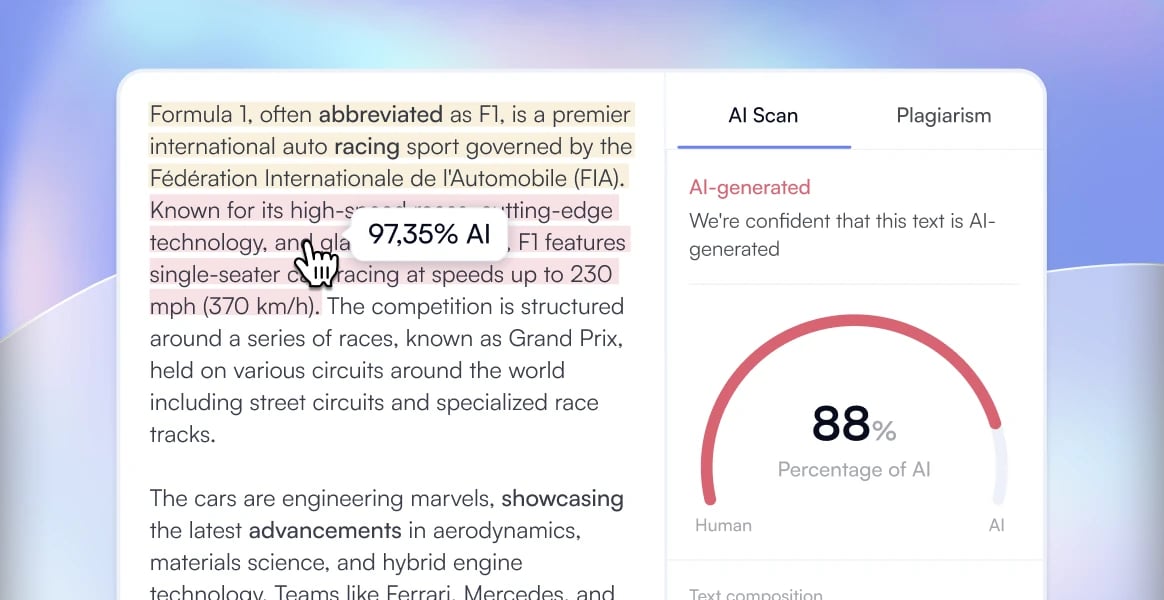
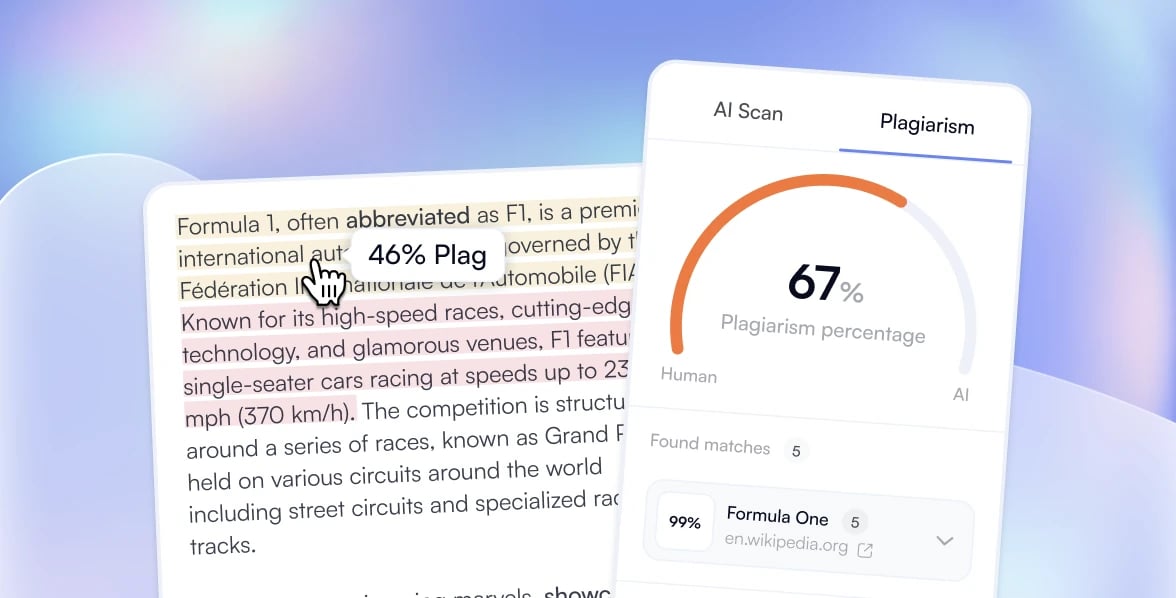
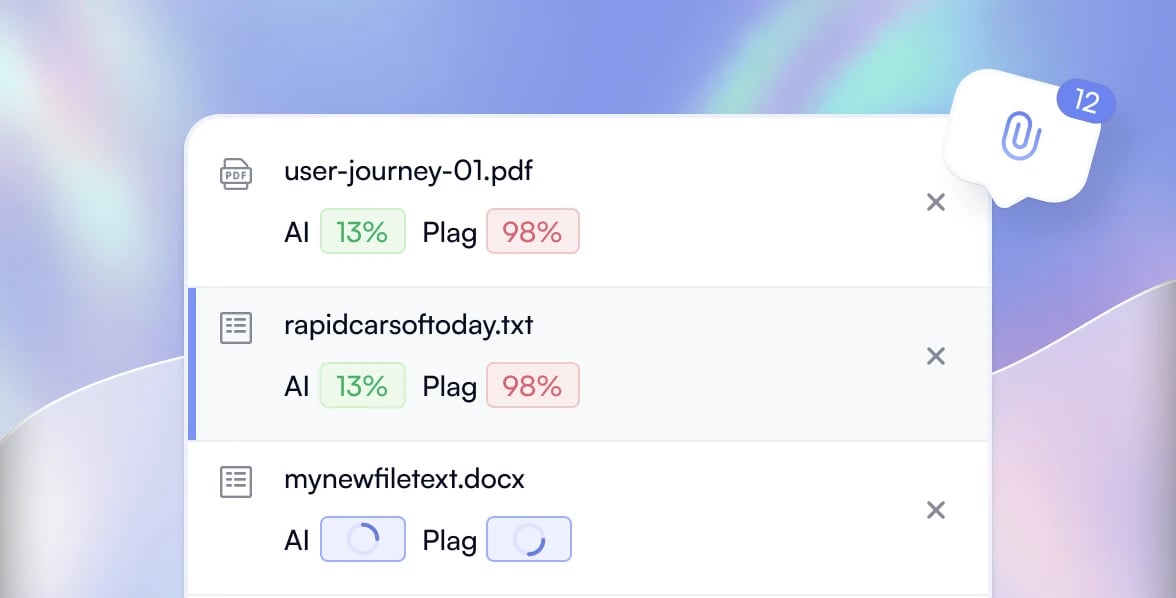
It's AI is designed from the opposite direction: it combines an AI detector for students with a plagiarism checker in one scan and is available directly to learners. You can upload essays yourself, see highlighted AI-like and plagiarised fragments, and fix issues before your teacher or admissions office runs their own checks.
If you used AI at any step — for drafting, rephrasing or editing — it is smart to double-check your final version:
This process helps you keep the useful parts of AI assistance (ideas, structure, grammar) while making sure the final text genuinely reflects your own thinking and meets your school's AI-use rules.
When choosing an AI detector for essays, two points matter most:
It's AI is tuned specifically to keep false positives low on student writing. According to our benchmarks block on this page, the false-positive rate is 0.8% on the ASAP 2.0 student-essay dataset and below 1% on average across GRiD, HC3 and GhostBuster benchmarks.
This doesn't make the detector infallible, but it means it is built to be safer for students than tools that aggressively flag anything "suspicious" without context.
The only reliable way not to "get caught" is not to cheat. Universities are still figuring out their AI policies, but almost all of them agree on a few points:
Use AI as a helper, not a substitute: outline ideas, check grammar, ask for explanations — and then write and edit the essay yourself. Running your draft through an AI and plagiarism checker is a way to catch accidental overuse of AI, not a way to launder fully generated essays.
Most modern detectors don't just look for "AI phrases". They use machine-learning models trained on large sets of human and AI-generated texts and then compute scores such as the probability that a passage was written by a language model. Some older approaches rely on patterns in word choice and sentence variation, but state-of-the-art systems — including It's AI — are full neural models evaluated on benchmarks like RAID, MGTD, GRiD and CUDRT.
Limitations remain: detectors struggle with very short texts, with heavily edited AI output or with writing that mixes AI and human contributions. They also depend on thresholds; if a school uses a very strict setting, more human texts can be incorrectly flagged.
First, don't panic and don't start randomly shuffling words to "beat the system" — that rarely works and often makes the text worse. Instead:
Tools like It's AI can help by highlighting AI-like fragments so you know exactly what to revise, but the safe path is always to replace questionable content with genuinely human writing, not to disguise AI output.
Schools typically use a mix of approaches:
From a student's perspective, the takeaway is simple: assume that both automated tools and human judgement can be used. If your course allows some AI help, agree on clear rules with your teacher and keep notes on how you used it. Running your own checks with an AI essay checker before you submit can help you see your work the way a detector might see it.
Consequences depend on the institution and on how serious the violation is. Common outcomes include:
Because the stakes are high and AI detectors are not perfect, many universities also encourage dialogue: if your work is flagged, you may get a chance to explain your process and show drafts. Using tools like It's AI in advance helps you avoid accidental plagiarism and see where your text might raise questions.
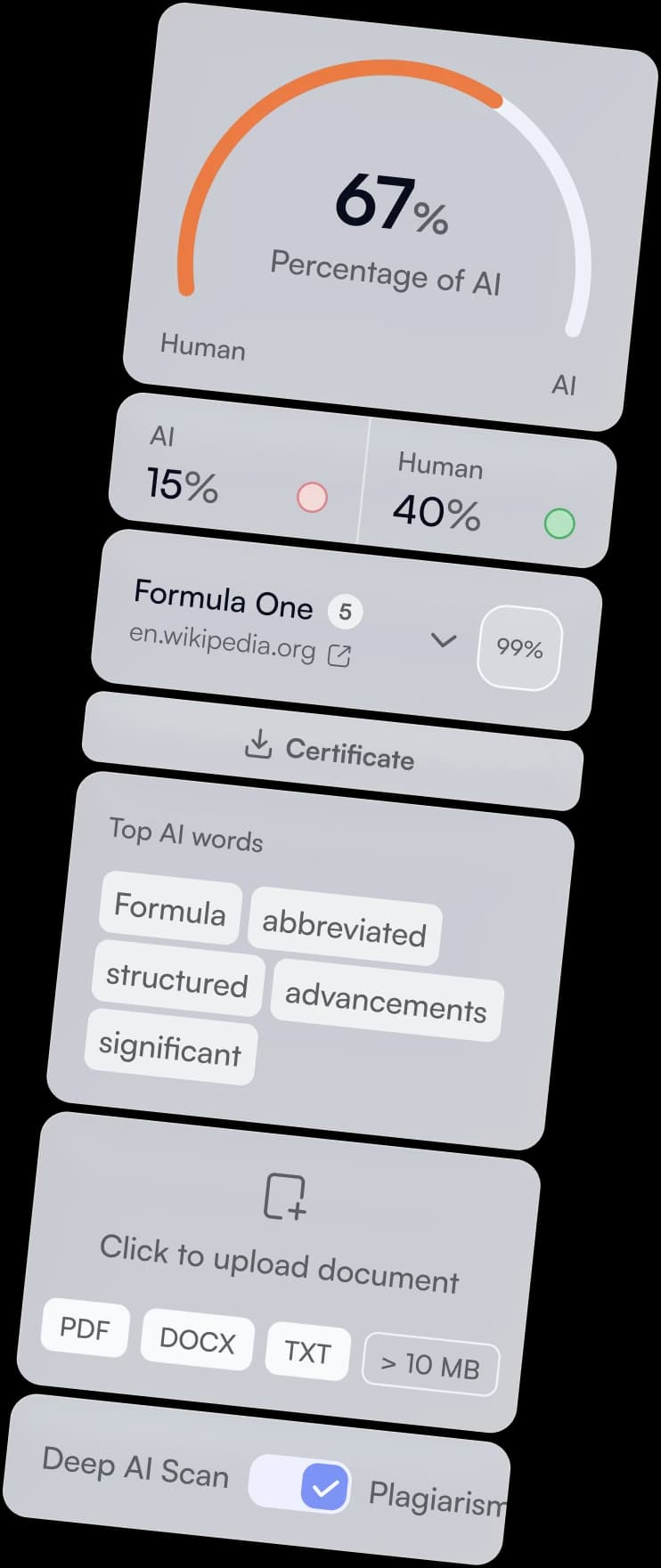
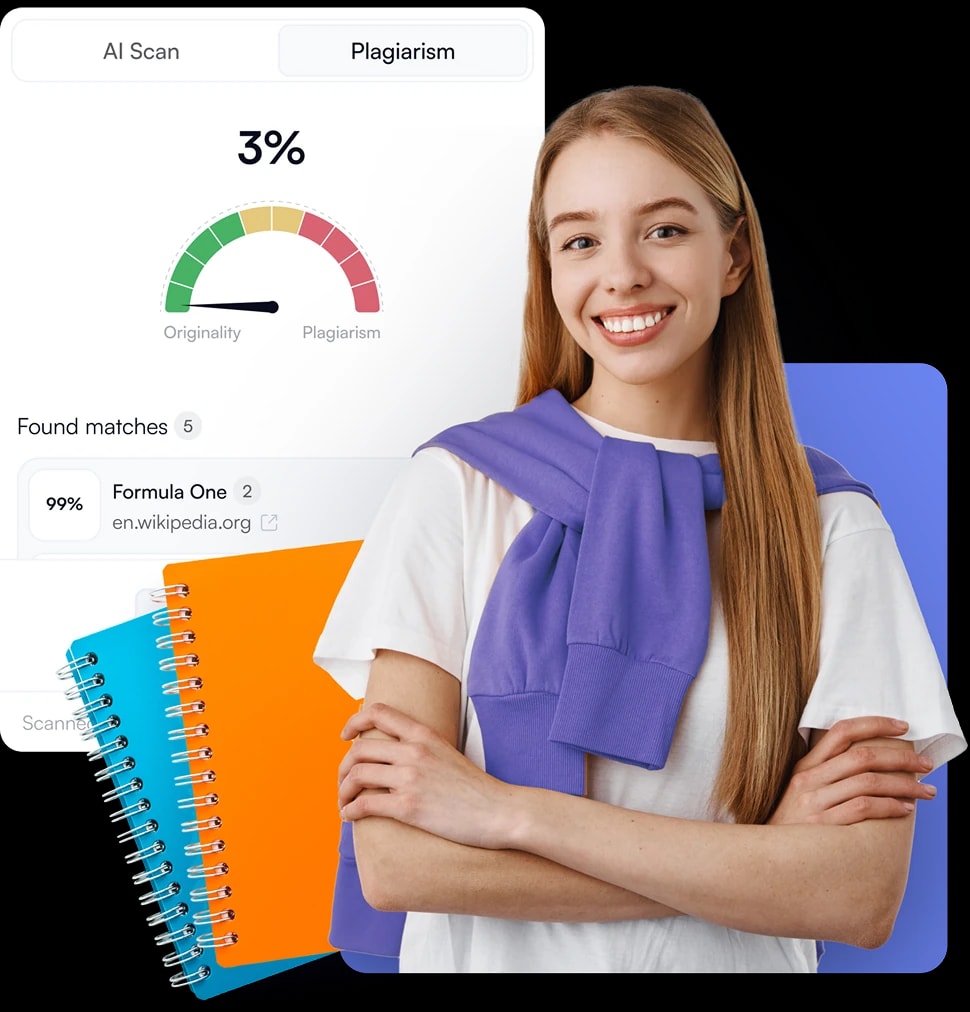
It's AI combines exactly what students need before a deadline:
Running your work through this kind of AI checker for students is not about hiding cheating; it's about making sure your final draft is original, clearly written and ready to be read by teachers, scholarship committees or admissions officers with confidence.