The most accurate AI detector in the world
![[object Object]](/_next/image?url=%2Fimg--target-tools-1.jpg&w=3840&q=85)
![[object Object]](/_next/image?url=%2Fimg--target-tools-7.jpg&w=3840&q=85)
![[object Object]](/_next/image?url=%2Fimg--target-tools-2.jpg&w=3840&q=85)
![[object Object]](/_next/image?url=%2Fimg--target-tools-9.jpg&w=3840&q=85)
The most accurate AI detector in the world
The most practical way is to add an AI detector for recruiters into your screening process. With It's AI you can:
You can then decide whether AI use is acceptable for that role, whether you need clarification from the candidate, or whether the application doesn't meet your authenticity standards.
To check a single application:
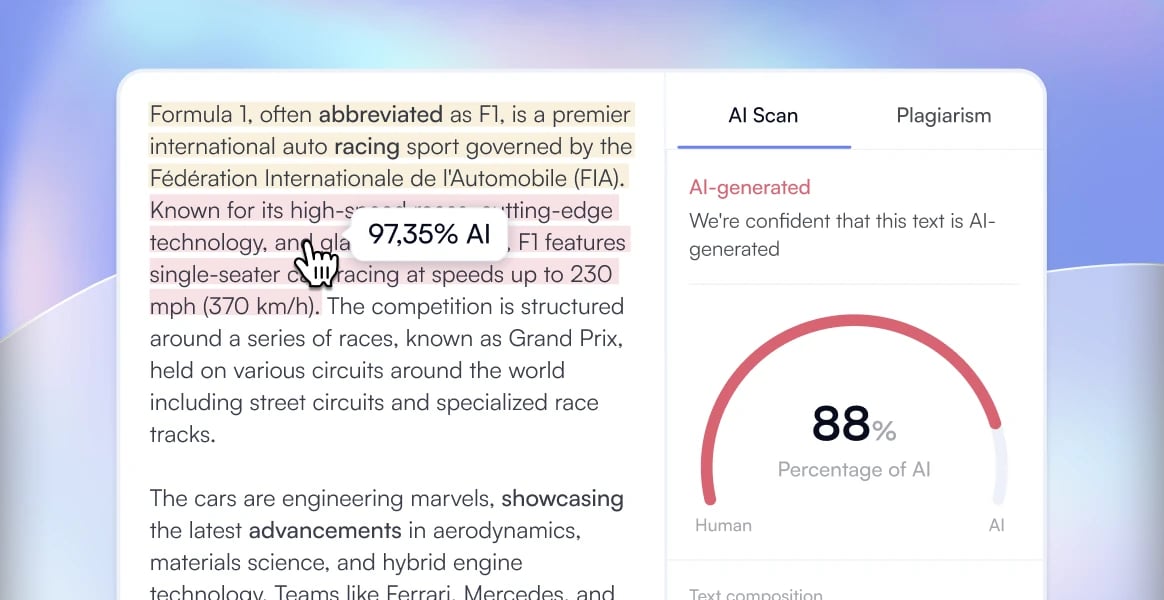
Because It's AI acts as an AI detector for resumes and CVs, you can quickly see which parts of the document might come from a chatbot and which parts look genuinely written by the candidate.
Cover letters often combine templates, company boilerplate and AI drafts, so a detector is helpful. Use It's AI as an AI detector for cover letters:
If the entire letter reads as AI-generated while other documents show a different style, it's a good reason to ask follow-up questions during the interview.
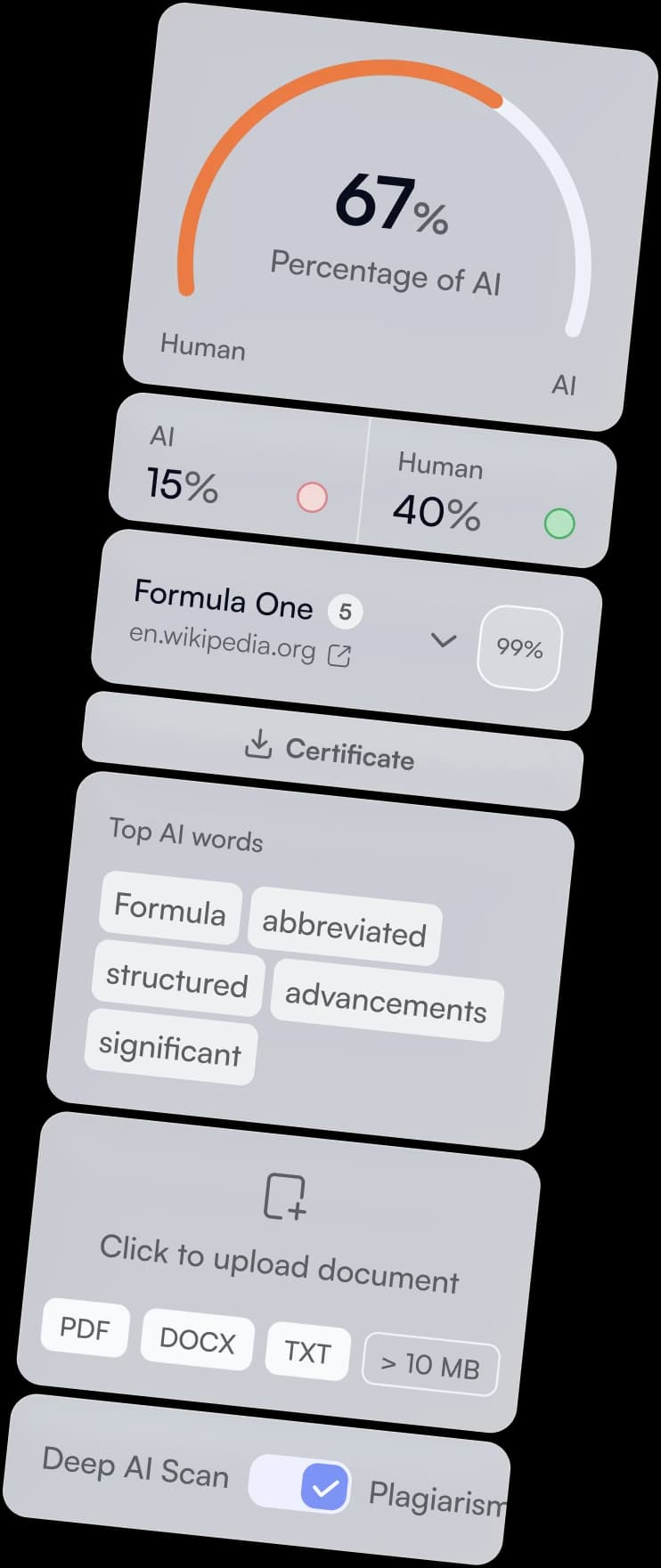
Detectors cannot say which exact model (ChatGPT, Claude, Gemini, etc.) was used, but they can estimate whether a piece of text is likely machine-generated. When you use an AI checker for recruiters like It's AI, you see how strongly an application matches patterns typical of LLM output.
This helps recruiters notice when a CV or cover letter appears to be written almost entirely by an AI tool, even if the candidate has edited it slightly.
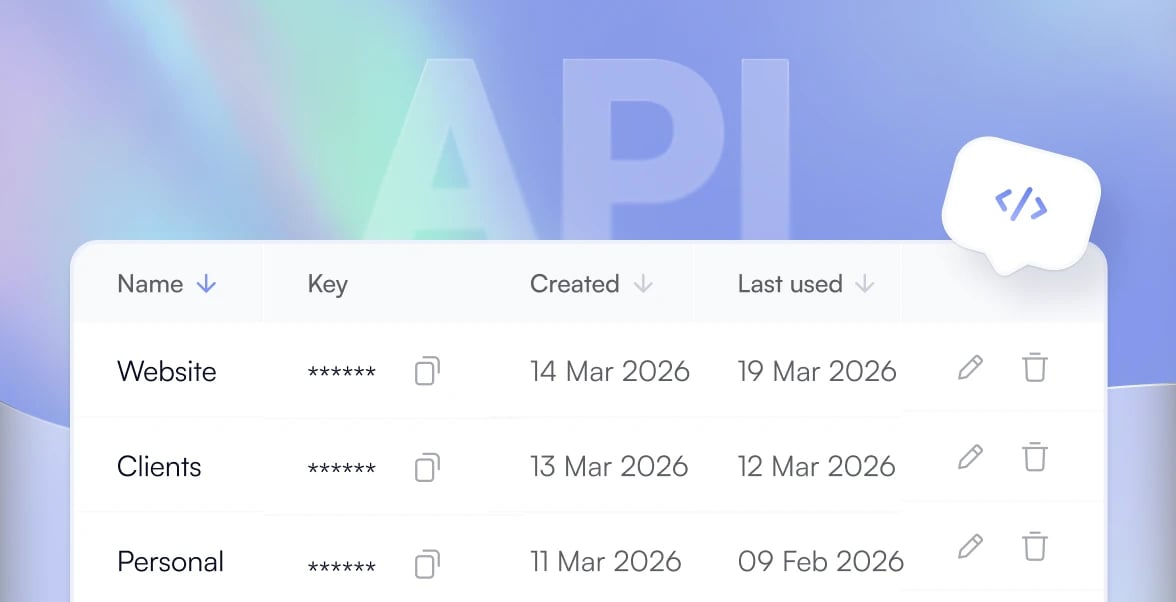
Most ATS platforms don't yet have their own reliable AI detection, but you can extend them with external services. Using the AI detector API for ATS and ATS–AI detector integrations, you can:
This turns your ATS into a system that not only tracks candidates, but also monitors how much AI is used in their documents.
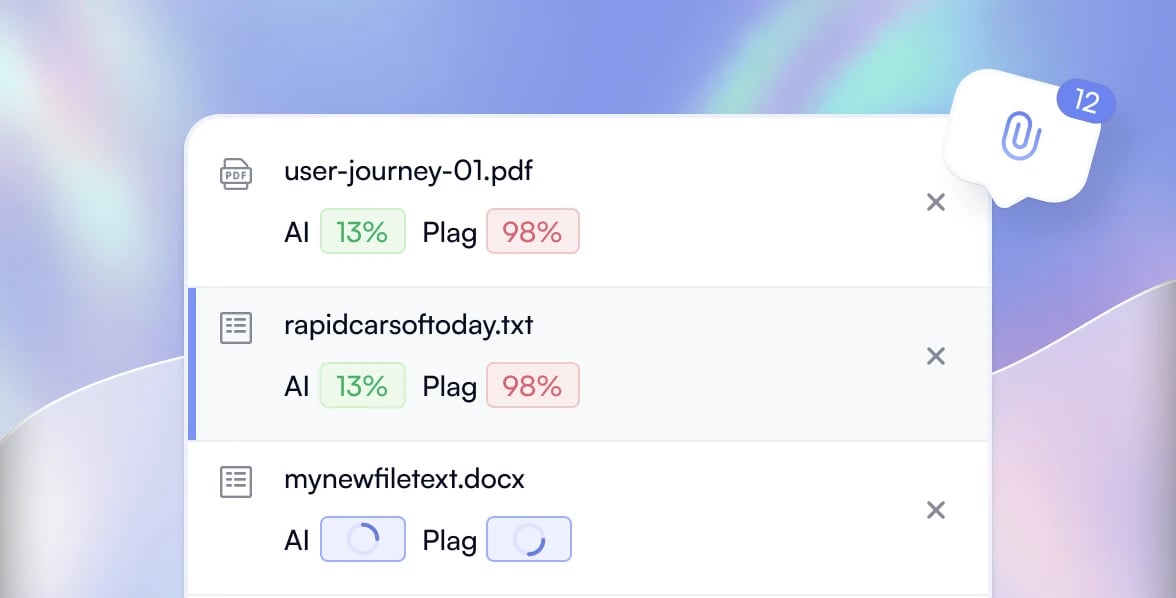
When you receive hundreds of CVs, checking them one by one isn't realistic. With It's AI you can use a batch AI detector for resumes:
This approach answers the query of how to screen multiple job applications for AI at once without building your own infrastructure.
Accuracy varies by tool and by how heavily candidates edit their drafts, but good detectors publish benchmark results. It's AI uses the same engine that leads the MGTD ROC-AUC scoreboard and performs strongly on RAID, GRiD and other datasets.
For resumes and cover letters this means:
Still, you should treat the results as an informed signal, not as unquestionable proof.
False positives — human writing flagged as AI-generated — are the main risk in hiring. To minimise them:
This way you gain the benefits of screening without unfairly penalising strong candidates.
It can be, if you choose a vendor with solid security practices and use the service correctly. When evaluating an AI detector application or API, check:
It's AI processes resumes to produce AI and plagiarism scores but does not pass your data to third parties. For stricter environments, use secure networks, role-based access and, where needed, separate API keys for different teams.
The best option for recruiting teams is a tool that:
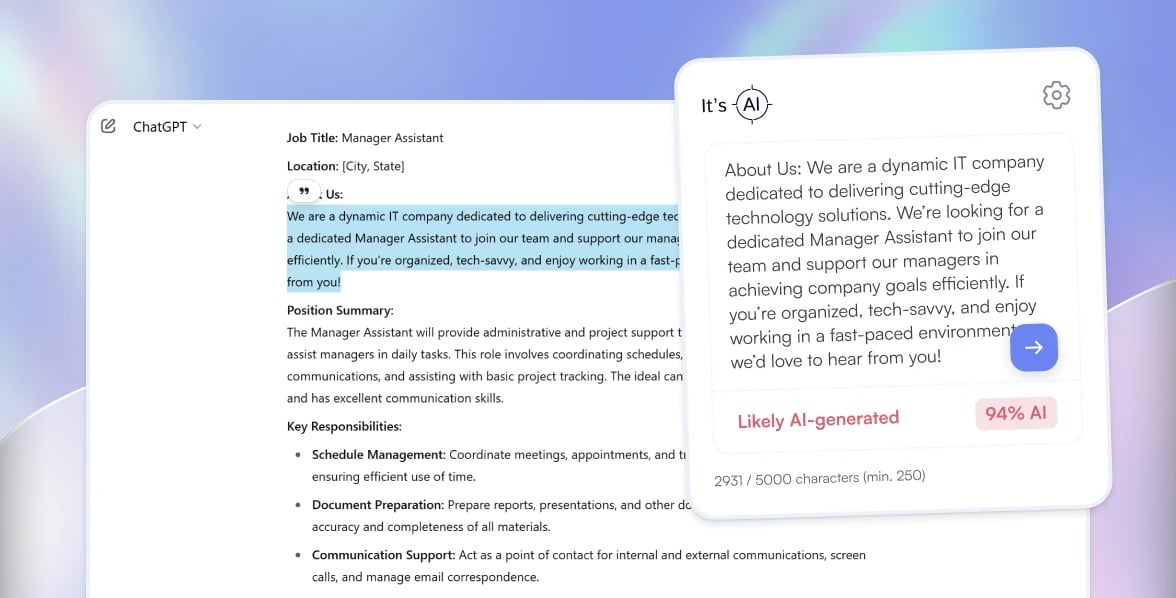
It's AI is built as an AI detector for recruiters, HR and hiring managers. It offers batch CV scanning, deep scan for job descriptions, ATS-ready API endpoints, plagiarism checks and shareable originality reports. Combined with strong benchmark performance, this makes it a compelling choice when you want AI detection to be a stable part of your hiring process.