AI Helps Write PR Content. Why Isn’t Everyone Happy About It? | It's AI
AI Studies
AI Helps Write PR Content. Why Isn’t Everyone Happy About It?
Use an AI detector to check PR content before publication. Why editing may leave questions about AI use, and how to review the finished text.
Svetlana ShakhovaOct 01, 202613 min read
A company may be happy with a press release or article it prepared with AI. Someone has checked the facts and edited the wording, and the team is ready to use it. The person reading it may still object to how AI was involved.
That difference is worth looking at before the article goes out. In PR research from 2026, professionals describe AI as useful in their work. Many journalists, meanwhile, say they oppose its use in pitches and press releases.
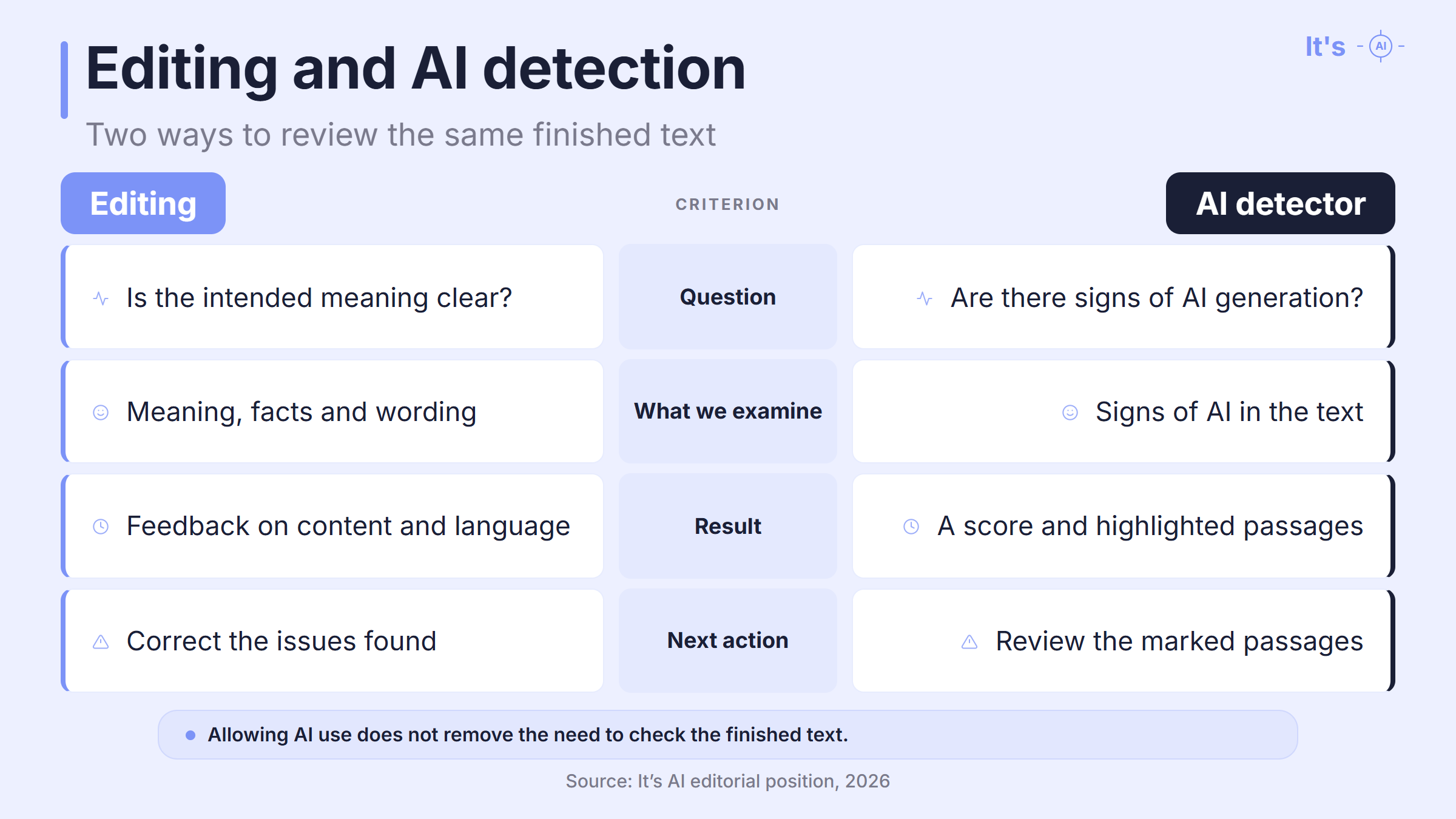
At It’s AI, we think a company should be able to check its PR content for AI before deciding to use it. Editing is part of that work, but “we edited it” can mean quite a few things.
Curious how your own text scores? Check it right here.
characters (min 200): 0/500000
PDF, DOCX, TXT
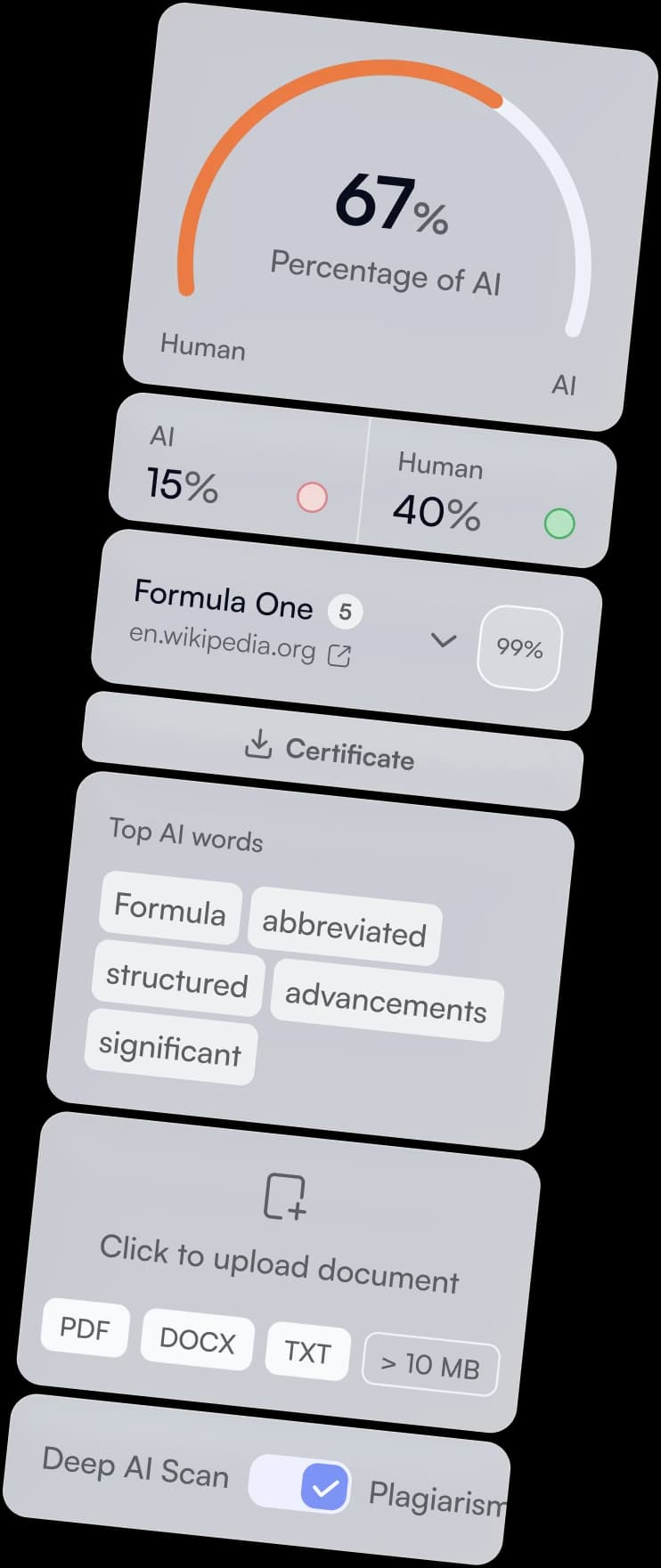
Deep AI Scan
find out which part of text seems AI-generated with our sentence-level segmentation.
Plagiarism check
detect plagiarized content by comparing your text against online sources.
Grammar check
find grammar and spelling mistakes in your text.
4000words left
Why edited PR content can still raise questions about AI
82% believe AI improves the quality of their work.
Muck Rack, State of AI in PR 2026
91% say they always edit AI-generated output.
Cision, State of the Media 2026
53% of journalists somewhat or strongly oppose AI use in pitches and press releases.
These surveys involved different people. They did not follow a text from its author to a journalist or measure whether it was accepted.
What interests us is that editing is already part of the process described by PR professionals. The concern about AI cannot simply be answered with a promise that someone will read the draft before sending it. According to Muck Rack, most respondents already do more than that.
There is no single amount of work behind “we edited it.” A draft might need a few corrections, with the rest left as it was. Or someone might use the facts from that draft and write a new article. Knowing that an editor worked on it does not tell us which happened.
If your company allows AI assistance, it is worth knowing which of those descriptions is closer to the material you plan to use. Approval of the content alone does not tell you.
AI-assisted or AI-generated text: does it matter to readers?
In a Macquarie University study, 547 people read a message about remote work. Some saw it as a work email, others as a social media post. They were also given information about who had written it:
A person, without using AI.
A person who used AI to help express their thoughts.
AI, with no help or oversight from the person sending it.
For the work email, the group told that AI had done all the writing gave lower trust ratings than either of the other groups. Between the human-only and human-with-AI groups, the difference in trust was not statistically significant.
The participants knew the stated authorship before giving their ratings. They were not trying to detect AI, and this was not a test of press releases.
We would be careful about treating any use of AI as the same thing after reading those results. In the email experiment, people responded differently when they were told a person had been involved. An account of how the text was prepared mattered, even though the message was still about remote work.
A company can allow help with wording and still expect its writers to contribute their own knowledge. Those expectations can coexist. What needs attention is whether the finished article reflects the work the company expected.
What an AI detector can show you in a PR text
An editor can read an article and decide that it says what the company wants to say. There may still be a separate question about signs of AI generation in the wording. An AI detector can check the finished document for those signs, whether it was written in-house or supplied by a contractor.
With It’s AI, you can look at the result by passage as well as see the overall score. In a long document, an editor can go straight to a marked section and read it with the paragraphs around it.
Take a paragraph about the company’s expertise as an example. It may sound fine on the first reading. On a second look, the editor might notice that it says very little about what the company actually knows or has done. A specific example could make that paragraph more useful.
That is an editorial judgment made while reviewing the highlighted text. The detector’s classification concerns signs of AI generation, not whether the company has supported its claims.
An accurate description does not become less useful because it was highlighted. We would not ask a writer to spend an afternoon trying synonyms when nobody can explain what is wrong with the original wording.
A check is useful when it helps the team make a decision about the text. A lower percentage alone tells you little about whether an edit was worth making.
When to check PR content for AI before publication
A team may intend to use AI only for an early draft. By the time the article is ready, some of that wording may have stayed and other parts may have been rewritten. The finished version is the one the reader will see.
We would run an AI check after the main edits. The result then belongs to the document the company is considering for publication, while there is still time to look at any passages that need attention.
An AI score will not tell you who came up with an idea or how a journalist will react. It does give you something more specific to work with than an assurance that the draft was reviewed.
Here are a few questions that may come up when checking shorter messages or working with several versions of a document.
Can an AI detector check a short PR message?
Yes, if it has at least 200 characters. That is the minimum length for It’s AI. If you add other messages to reach it, the service will analyze them together. You will not get an individual result for the short message you originally wanted to check.
Do I need another AI check after editing?
We would check again after rewriting a section or adding new paragraphs. Keep the earlier report if you need it, but keep it with the earlier draft. It cannot show the result for wording that was added later.
Should I send an AI detection report with a press release?
You do not have to send it just because you ran a check. Your team can use it internally. If someone asks to see the report, make sure it goes with the version they are reading.
What if an AI detector flags our standard company description?
You may decide to leave it as it is. Check the wording and the facts before making that decision. Names and specifications, for example, may need to appear exactly as approved. Changing them to get a different score would give you a less accurate description.