Challenges Beyond Copy-Paste
If students earlier used to simply copy from Wikipedia, books or other sources of information with light adjustment to the context, now the situation has moved beyond it. Now the problems are:
The Invisible Ghostwriter
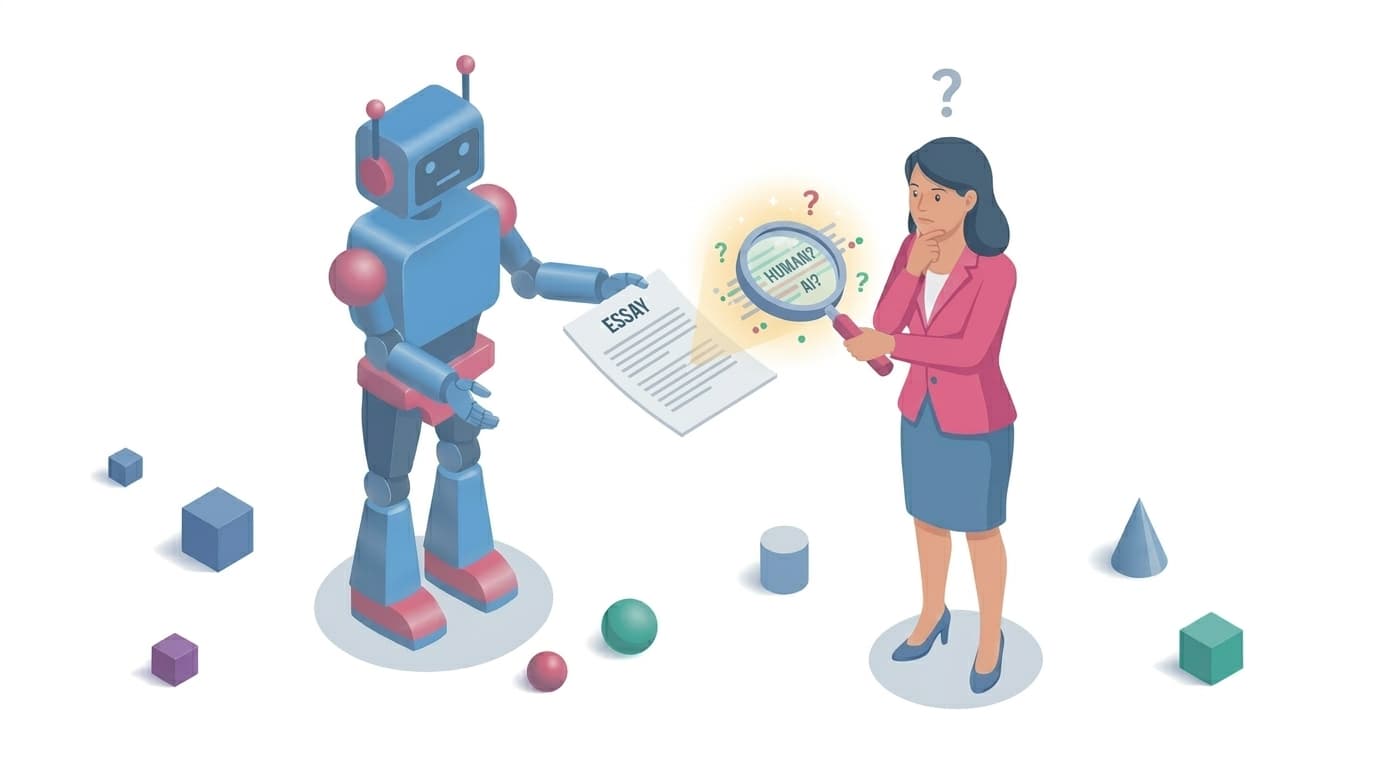
AI-generated text isn't a direct copy-paste from a single source. It's a unique synthesis of the data it was trained on, making traditional plagiarism checkers effectively blind to it. A student can submit a perfectly coherent, entirely original (in the sense of not being copied) essay without writing a single word themselves.
Overreliance on the AI in everyday life has blurred the line between a legitimate digital tool and an academic integrity violation. People tend to use it too much, accelerating the process of gaining information and handling tasks, although it is creating confusion for both students and educators.
The Erosion of the Learning Process
Writing an essay is a process of learning. Students need to structure an argument, find the right evidence, and articulate a thought. Doing it all means to go deeper into the topic and train the brain. By outsourcing this struggle to an AI, students skip the very cognitive workout that education is designed to provide. They get the grade but miss the growth.
AI disrupts traditional notions of integrity.
Another major issue is detection as most of the tools struggle with accuracy. They often yield false positives that flag genuine work as AI-generated, increasing faculty workload and student stress. For example, Turnitin's detector has been criticized for wrongly accusing students, leading to investigations based solely on scores.
Question of Ethics
Why is using tools like Grammarly in editing okay, but utilizing AI might be considered cheating? The output can be marked as AI-generated, threatening honesty and trust. Instead of classical plagiarism-checkers, institutions have integrated AI detectors that can reveal this. You can edit it according to the results of the AI-detector but it still remains in doubt, whether submitting such text as original work could still lead to copyright infringement claims or academic penalties.
Solutions
The solution should embrace all possible challenges to build a new framework for integrity that is resilient, adaptive, and educational. This requires a three-pronged approach: Policy, Pedagogy, and Technology.
1. Reconsidering Policy
Educational institutions must create and communicate clear, specific and fair-use AI policies. Clarity might be reached through setting the acceptable use of AI.
For example: "Any use of AI must be explicitly cited" or "AI can be used for brainstorming and initial research, but is prohibited for drafting".
Educators should explicitly discuss these policies, explaining that the goal is to develop the student's own critical thinking and communication skills and over reliance on AI slows it down.
2. Designing AI-Resistant Assessment
The best strategy is to teach students how to use AI responsibly. The final result shouldn't be more important than the process itself. Focus on the particular steps that will lead to it.
For example, when you give an assignment, break it into smaller parts, like outlines and drafts, to make the entire creative journey more evident and easier to control. Each part requires personal reflections by connecting topics to their own experiences or specific classroom discussions that AI can't fake. And instead of just submitting the task, let students make oral presentations to confirm that the work truly contains their authentic voice.
The most forward-thinking approach is to additionally teach students how to use AI to research information. By treating AI as a tool for critiquing arguments, or a partner for brainstorming along with clarifying its ethical utilisation, it would be possible to prepare students for a world where AI literacy will be a crucial skill.
3. Using AI Detection
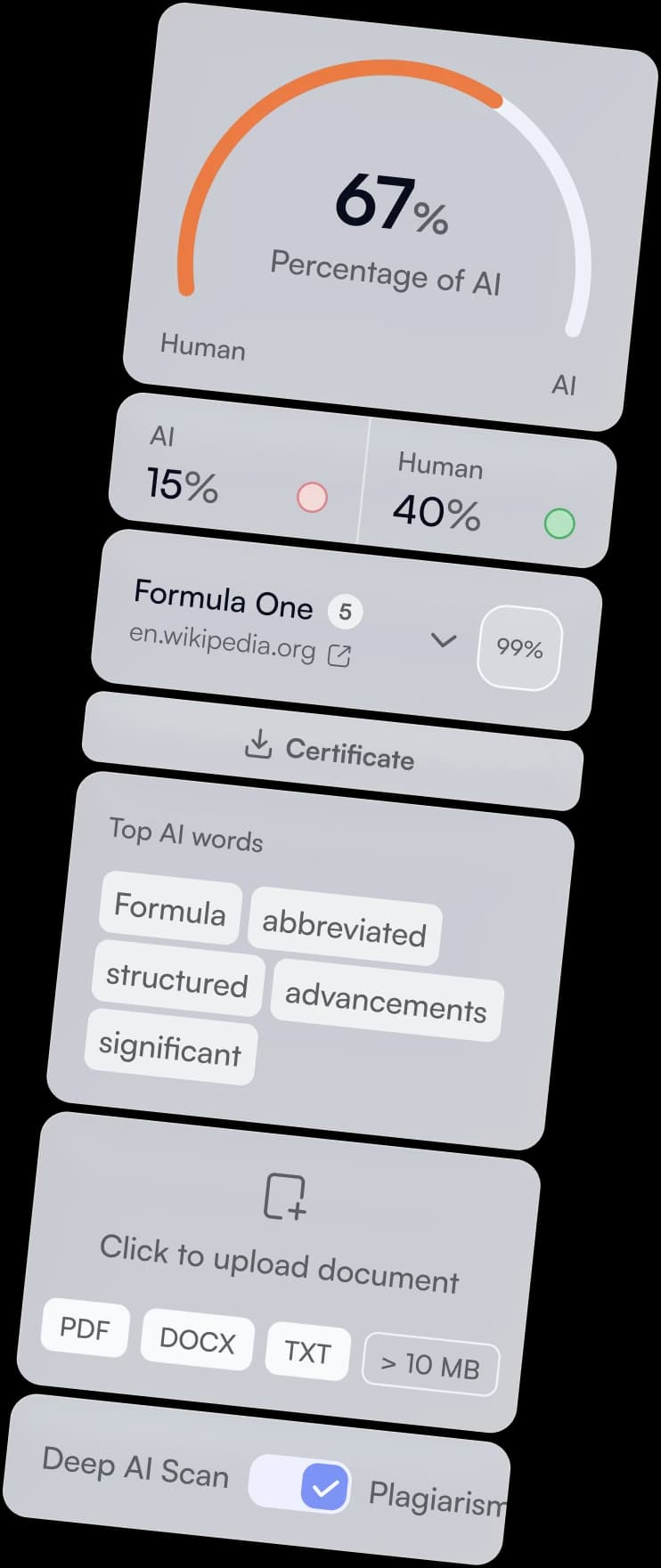
Well, even with the best policies and pedagogy, verification remains essential. AI detection tools are created to ensure that the work is authentic. It's something like an updated version of plagiarism checker but is dedicated to reveal AI rather than copied ideas.
AI Detectors have become safeguards for honest students and a starting point for those who need a constructive dialogue about their work, their attitude, and the importance of academic honesty. It's quite a really good help for teachers to reveal cheating in the era of increasingly advancing technologies.
And as AI writing tools become more sophisticated, so must AI detection. Now there are a lot of detectors with many different features that are constantly updated to deliver the most truthful results. However, not all of them are accurate. We have compared several most popular and found the most reliable. Read AI Detectors Tested: Which Tool Is the Most Accurate? to learn the results.
Conclusion
The development of AI has outpaced the speed of regulation of related issues. In education it causes certain integrity-related complexities, but does not exclude the possibility of finding solutions.
After all, there is no point in eliminating AI from education — that's an impossible and counterproductive fight. The main aim should be to build an educational environment where AI is used to enhance human intelligence, instead of replacing it.
We can direct this powerful technology toward a future that supports rather than undermines the timeless pursuit of knowledge by multi-solutional approach. This approach should embrace utilization of advanced AI detection tools, clear ethical standards and updated learning methods and academic practices.