Defining AI Content
To make sure we understand each other correctly, we'll start with the definition.
AI content is the content produced by AI tools without human assistance. Simply saying, it's sophisticated computer algorithms that give answers to your prompts.
Although it's a good help for those who need simpler, more clichéd output right here and right now, it can't be called an accurate replacement of the human way of speech.
Reasons why?
Factual accuracy
AI doesn't have the ability to distinguish between accurate, outdated, or wrong information, so it may manipulate the output.
AI is taught through machine learning on all possible sources of information that have been digitised and analysed, including books, scientific articles, lowbrow forums, Reddit, etc. And if it doesn't have the proper answer to your question, it can just fabricate it.
Emotional component
Human communication is rich with irony, subtext, and subtle emotional shifts. For sure, you can ask AI to write a sad story and receive a passable result, but it won't be the same as a human's.
It doesn't have a human understanding of what will resonate with the audience, struggling to replicate this depth.
We will just get the reassembled patterns that it has learnt, including words and phrases commonly associated with certain emotions. We won't feel those emotions and intentions as well as the text itself.
Lack of personal experience
The main problem is that AI is inanimate, lifeless, unalive if you wish. It has no life, memories, personal history, or full understanding of processes from a human perspective.
It cannot draw from rich experiences, while writing is often about values, meanings, and the ability to convey them to the audience in the way it understands you.
All of the above comes from a unique authorial outlook shaped by personal journeys that AI cannot fabricate. It cannot recount the specific details that make a story believable and relatable — like the exact smell of air after a rainstorm that reminds you of the carefree freedom of a childhood summer.
Common views and feelings are what really build a connection with the reader.
Water removing
"Water" in writing refers to unnecessary content that adds no value.
We have repeatedly said that AI is trained on a significant amount of online content (that itself is not perfectly concise), and then it reproduces these patterns. When we generate the text, we start the process of thinking that involves finding information and making the output by predicting the most statistically probable next word or phrase. This process usually leads to circular reasoning, restating the same idea in slightly different ways, and using filler phrases to maintain flow without advancing the argument or narrative. As a result, we may get text with a vague focus and words for the sake of words.
Does this text solve the problem it was intended to solve? Well, unlikely.
Cultural differences
There are many jokes about the accuracy of the simultaneous interpreter translation during negotiations when parties speak in metaphors and proverbs. It might sound funny, but it's a similar situation with AI (well, maybe not so stressful…).
When you need text written in another language (not English), AI may struggle to interpret the multicultural specificity correctly. It lacks the innate sensitivity to grasp the nuances of the different language/slang/dialects well. A human editor is essential for identifying potential missteps, adjusting the tone to be culturally appropriate, and ensuring the communication is respectful and accurately understood.
Target audience
AI texts should give valuable messages to a particular audience without any "watered information". AI can give good ideas, but it still tends to say the same things in different wording, giving no additional value to the reader.
The topic also should be relevant. Imagine experts read instructions for beginners, or vice versa, the beginners try to understand complicated articles intended for experts. In both cases, it would be useless, as it makes no sense. However, if the material is suited directly to beginners or experts, it will have more value to each of them.
How an AI Detector Can Help in Editing
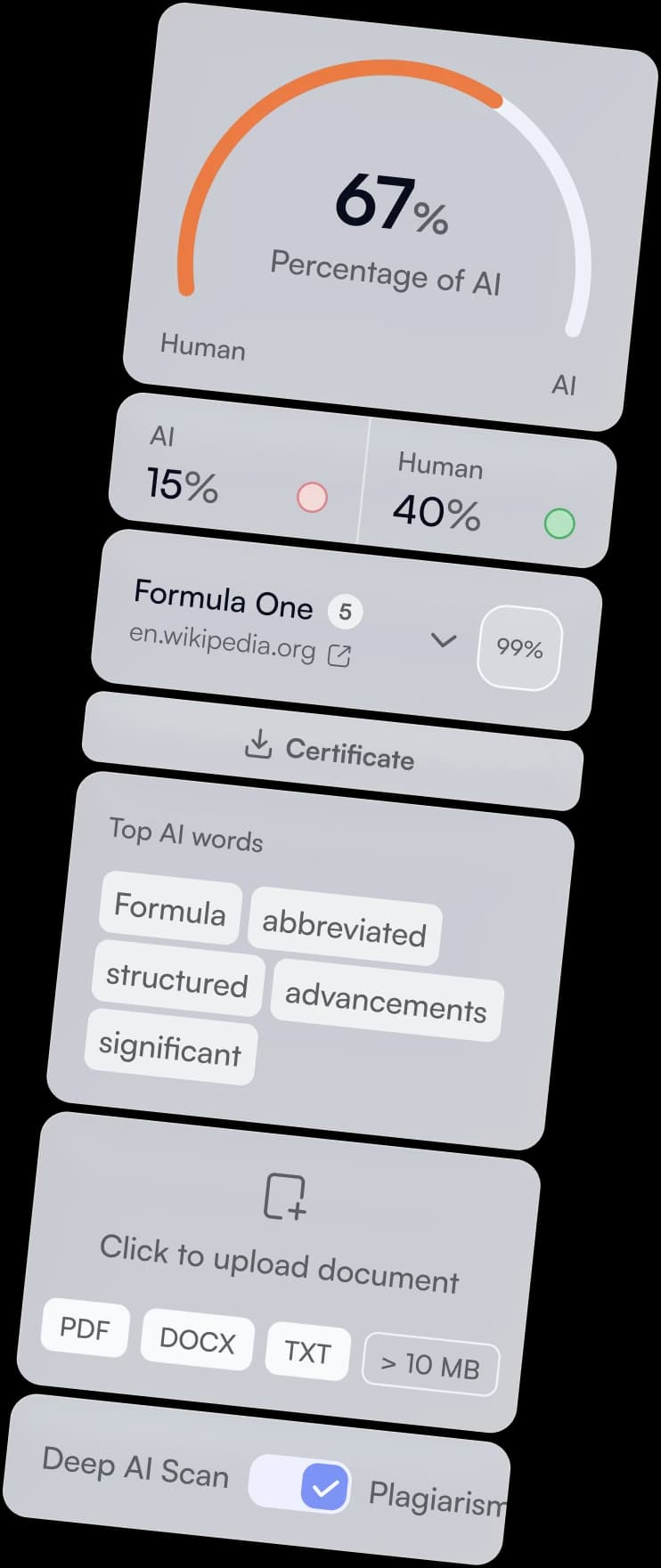
Now that the necessity of checking AI output for trustworthiness is evident, doing it manually takes too long. That is where the AI detector becomes a valuable tool for an editor, not just for identifying AI-generated text, but for systematically improving it.
An AI detector often highlights sections of the text that have a high probability of being AI-generated. Those flagged parts are typically the most commonly used AI wording that lacks experience and is full of formality. In other words, they are the parts that most urgently need a human touch to become engaging, authentic, and trustworthy.
Such a targeted approach enables the editor to thoroughly humanize the content by injecting authentic emotion, real-world examples, and concise language, while also localizing idioms and slang for a specific audience.
Read more about the ethical ways to rewrite content.
Conclusion
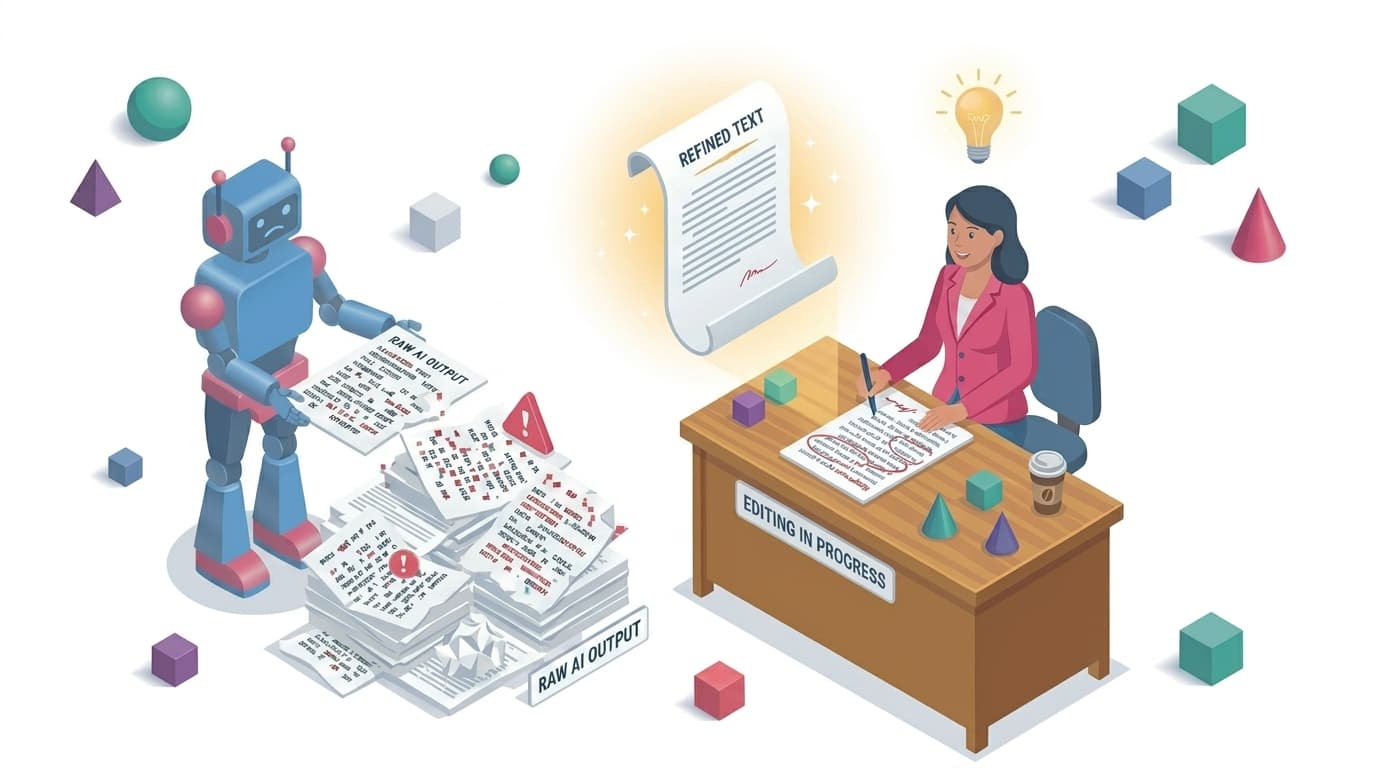
The true power of AI content is in its form refined by the human touch. You can't just leave it as-is if you want to have higher-quality, more reliable, and more engaging content.
In a digital world increasingly overwhelmed with AI-generated content, the ultimate competitive advantage is originality. Texts that contain the human soul, personal views, and verified information will stand out and be catchy.
So, the efficiency of AI together with the critical thinking, creativity, and emotional intelligence of a human is the best formula for valuable content.
With the help of It's AI, you can detect AI and make the process of editing texts both fast and accurate.