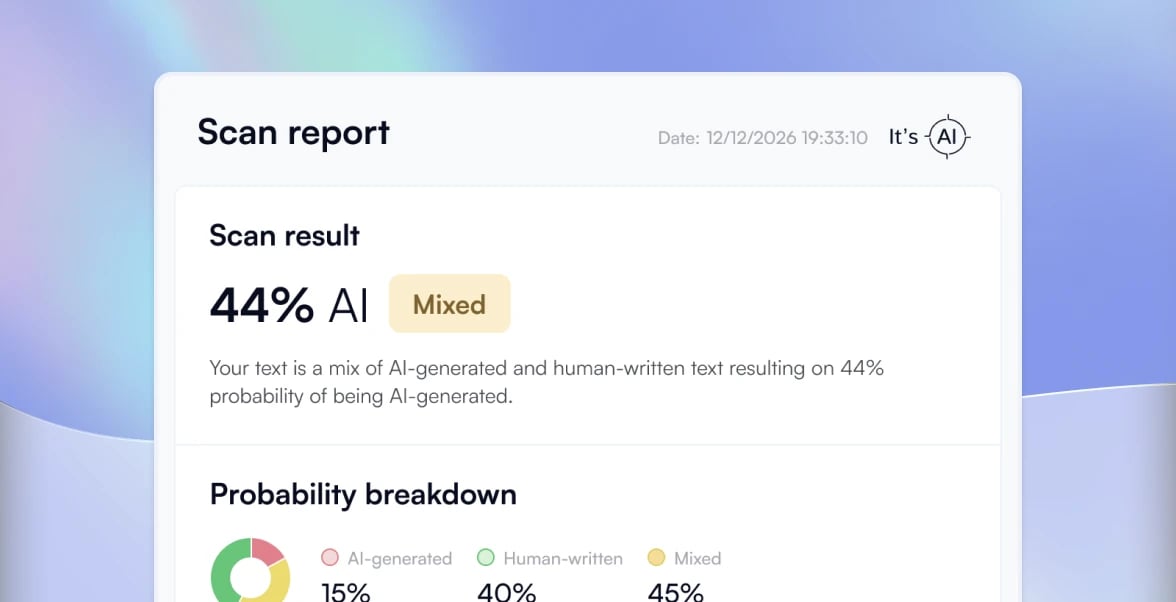
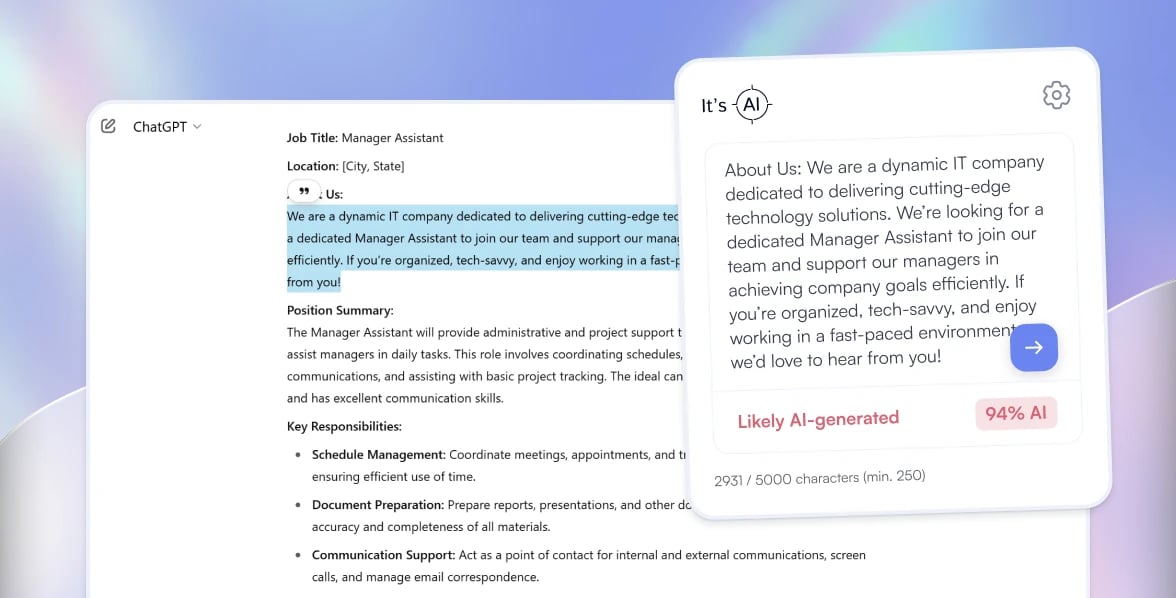


No. A scan estimates patterns associated with AI writing. To explain your authorship, keep outlines, notes, source material and revisions, and agree with your client on any permitted AI assistance.
Review the version you plan to deliver. If a client commissioned both Arabic and English copies, review each as a separate draft and keep the corresponding notes and source material.
Results depend on the text, its length, topic and editing. Consult the accuracy page for Arabic benchmark details. Multilingual benchmark figures are not an accuracy guarantee for an individual Arabic document.
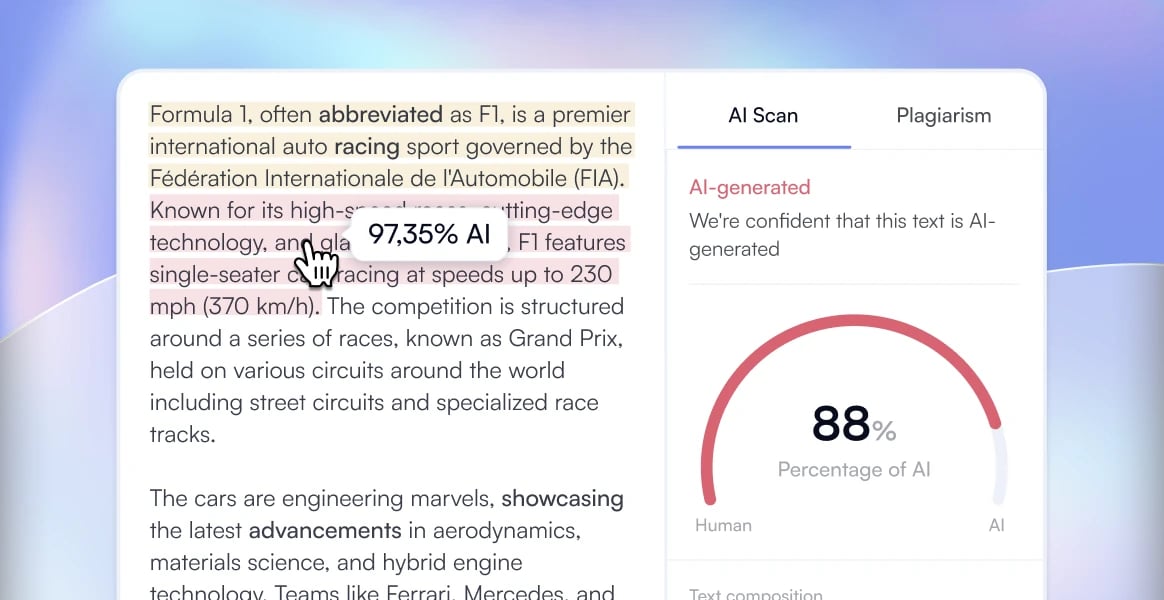
Keep a copy of the full article. If a substantial section is flagged, read it in its original language and compare it with interview notes, quotations and the relevant stage of the draft.
Use the free allowance currently shown in the app to try a scan. Check the current plans for document limits, batch uploads, reports and API access.
You can review substantial articles, blog posts and commissioned copy. Check the original Arabic wording before delivery and compare highlighted passages with your brief, sources and draft history.
No. Review highlighted text for clarity, specificity and source accuracy. Detectors can make mistakes, so focus on the quality and transparency of the writing rather than editing solely to reduce a score.
Batch upload can support multi-document editorial projects. Check your account for current limits and review each article separately before making an editorial decision.
Export the scan report available in your plan and provide the relevant brief and draft context. A report communicates the analysis; it does not certify copyright ownership or prove authorship.
No. Verify facts, quotations and sources through your editorial process. AI likelihood, source similarity and factual accuracy are separate questions.