Why Ethical Rewriting Matters?
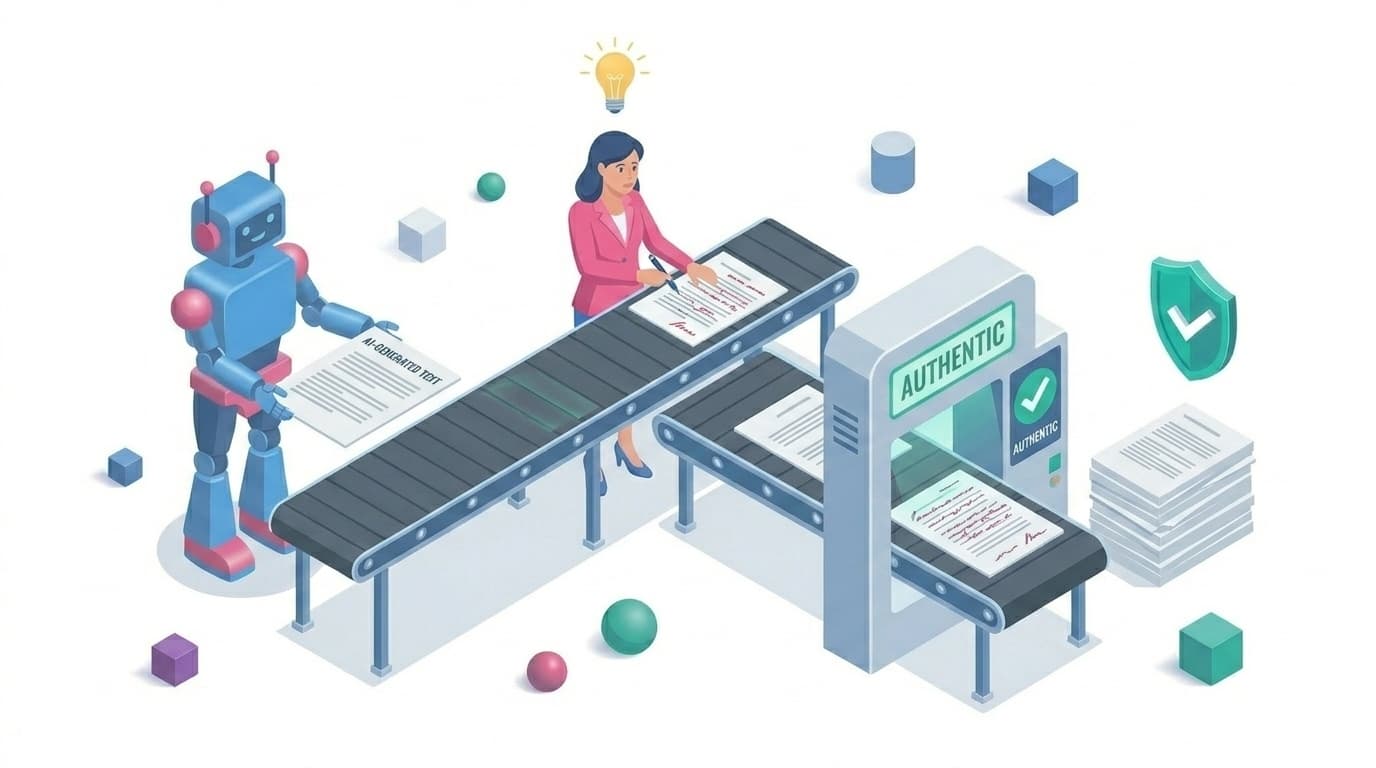
The rise of AI-generated content has blurred the line between human and machine authorship, making ethical rewriting not just preferable but necessary.
To clarify the understanding, ethical rewriting is the process of rephrasing the initial content preserving the original meaning and factual accuracy. It's about understanding the core message and expressing it in entirely new sentence structures and clearer language without deception or stealing the original work.
AI models are trained on existing content. The output can be marked as AI-generated, since they write many different texts reproducing near-identical machine phrasing without any proper attribution. Whether plagiarism can reveal this, remains in doubt, however submitting such text as original work could still lead to copyright infringement claims or academic penalties.
Every person in every sphere increasingly values transparency. For example, in business if a company is caught passing off AI content as human-written, brand trust can plummet overnight. In education, the use of AI-generated work without proper attribution puts a person's reputation and qualification at risk. Ethical rewriting transforms AI drafts into original work, aligning with plagiarism policies and honesty standards.
As you can see, ethical rewriting isn't just a "right thing to do" according to your moral principles. Companies and creators who invest in proper AI content refinement protect themselves from legal issues, maintain audience trust, and ultimately outperform their competitors.
What are the ethical ways to rewrite?
Paraphrase with original thought
Instead of copying the whole AI output, try to rephrase it in your own words, while adding unique perspectives. Make up other examples or give personal insights as arguments. Don't hesitate to use conversational tone and metaphors where appropriate. Dictionaries or tools like Grammarly are to help you.
Combine Multiple AI Outputs
Generate multiple versions of the same content from different AI tools, blend the best parts and refine them into a cohesive, original piece. Reorganize paragraphs for better flow, ensuring arguments build naturally like a logical continuation of the idea rather than a set of phrases. This will reduce the dominance of one AI and can make the whole text be more human-like.
Add citations and expert opinion
AI often produces generic statements and lacks real-world experience. Replace those statements with specific cases from your industry or experience. Refer to expert or leader quotes, recent statistics and reliable sources to add credibility. The more well-reasoned and logical information there is, the more reliable the text will look.
Take the help of AI-detectors
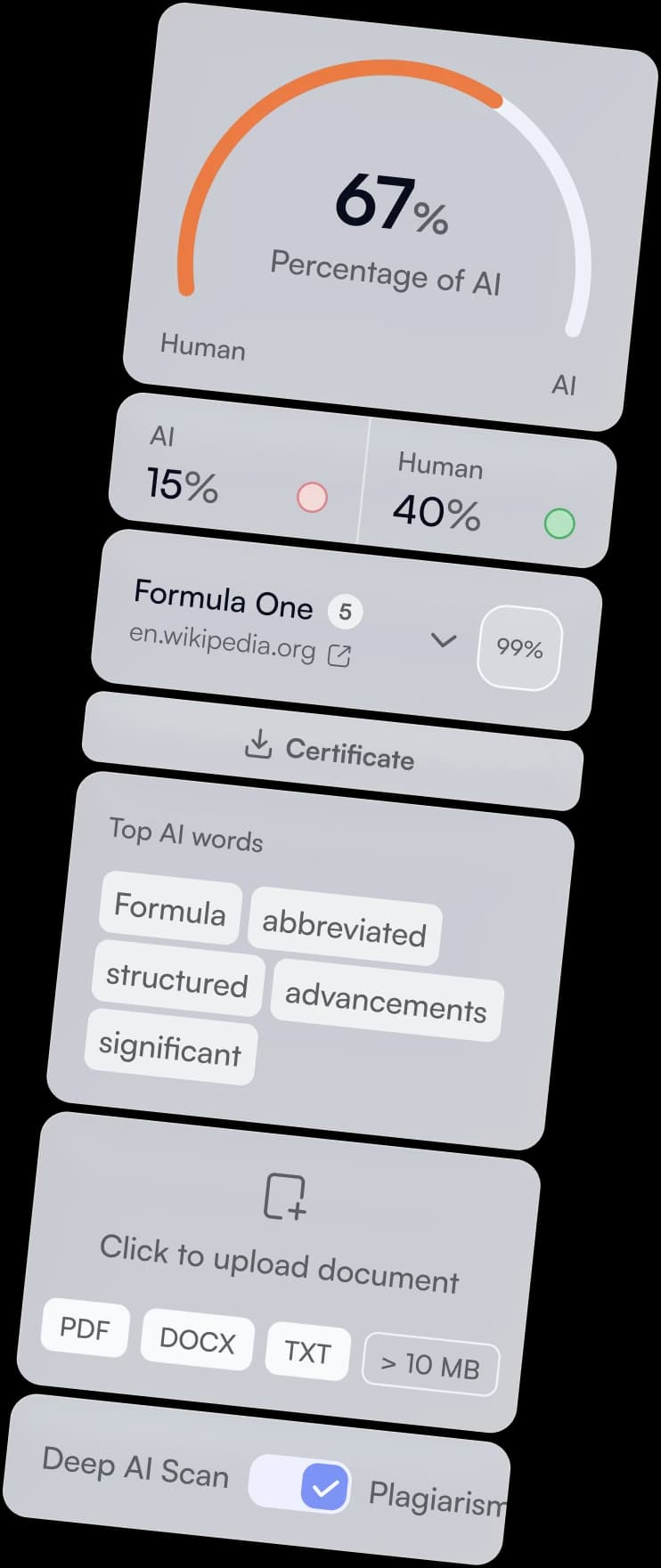
Working with AI-detectors is much easier and faster than other ways. Mostly you just paste the text, they analyse and in a moment show which sentences or paragraphs you should rewrite so the text will become more human-like.
In It's AI detector in addition to per-sentence AI probabilities we also highlight top words that affected your AI score the most, so that you could achieve original writing with the smallest amount of changes.

Use AI as a draft, not a final product
Don't rush to accept the AI version, go through it several times and treat it as a variation of how your product could look. Let it become a starting point of your own unique view: take the best ideas, find rough outlines but add more value through your own key explanations and adjust the tone to match yours.
Always remember about The 80/20 Rule: 80% original content, 20% inspiration.
Bad ways / what to avoid
"Undetectability" trap
Some tools promise to "humanize" text just to bypass detectors. In fact, they offer to trick systems by disguising AI content rather than refining it.
Using those tools endangers still being caught for plagiarism, copyright infringement and other legal issues for which you will have to be punished.
Minimal Changes
Simply swapping a few words or slightly rephrasing sentences doesn't help to make content original. It's still AI created, just a little bit out of shape. Plagiarism detectors or search engines may still flag it.
Ignoring Fact-Checking & Source Verification
Never forget to recheck all the data and information given in the AI-text as it can be outdated or even fictional. It's not an exception that sometimes it makes up fake quotes, statistics and incorrect data. Passing off unverified text as your own can lead to legal issues (at least as spreading misinformation) and reputation damage.
Over-Reliance on AI
AI can't replace an expert's opinion on particular questions. If your work implies having detailed analysis, personal experience and original thinking, AI can make it worse by reducing its value. It can somehow explain basic principles but not give a new vision on the issue. Such products won't just meet professional or academic standards as they just reexplain existing materials.
Hiding AI-use when its disclosure is required
In some cases, it is obligatory to show all the sources of information that were used in preparing texts. For example, institutions like schools, universities, agencies and publishers mandate AI disclosure. Violating this rule is dishonest and can be considered misconduct. As punishment the penalties from rejected submissions to job termination are waiting.
Conclusion
Bypassing AI detection doesn't have to mean deception. You can use AI as your inspiration but you need to maintain ethics and give real human value by thoughtfully rewriting AI-generated content — adding personal insights and examples, correcting language and ensuring originality.
You can do it on your own or with the help of AI-detection tools that spotlight AI-generated text for you to fix. Detector It's AI has an advanced set of features that not only highlight the generated parts of the text, as almost all other detectors do, but also underline specific words that should be replaced to achieve better results.
Ethical rewriting isn't about tricking detectors — it's about improving the efficiency of AI to meet human standards of originality and integrity. The goal should always be to enhance content with human creativity, not to disguise its origin dishonestly.